Kenya safari camping vs lodge accommodation is not one question with a single answer. A lodge can be a dependable stone hotel with a pool. A camp can be a public campsite with a bucket shower, a mobile tent under canvas, or a permanent suite with a proper bed and hot running water. The choice depends less on the label and more on the specific property, its location, the season, and the safari rules around it.
What is the difference between a Kenya safari camp and lodge?
A Kenya safari lodge is a permanent stone, timber, or concrete building, while a safari camp uses canvas tents that may be basic, mobile, or fully furnished. A tented camp is not automatic rough camping. Many provide real beds, private bathrooms, hot showers, electricity, dining, and guided activities depending on the property.
Public campsites sit at one end of the range. They usually require you to bring your own tent or rent a basic one. Shared ablution blocks, cold or bucket showers, and limited electricity are common. Kenya Wildlife Service and some private operators run these sites inside or near places such as Tsavo, Amboseli, and Lake Nakuru.
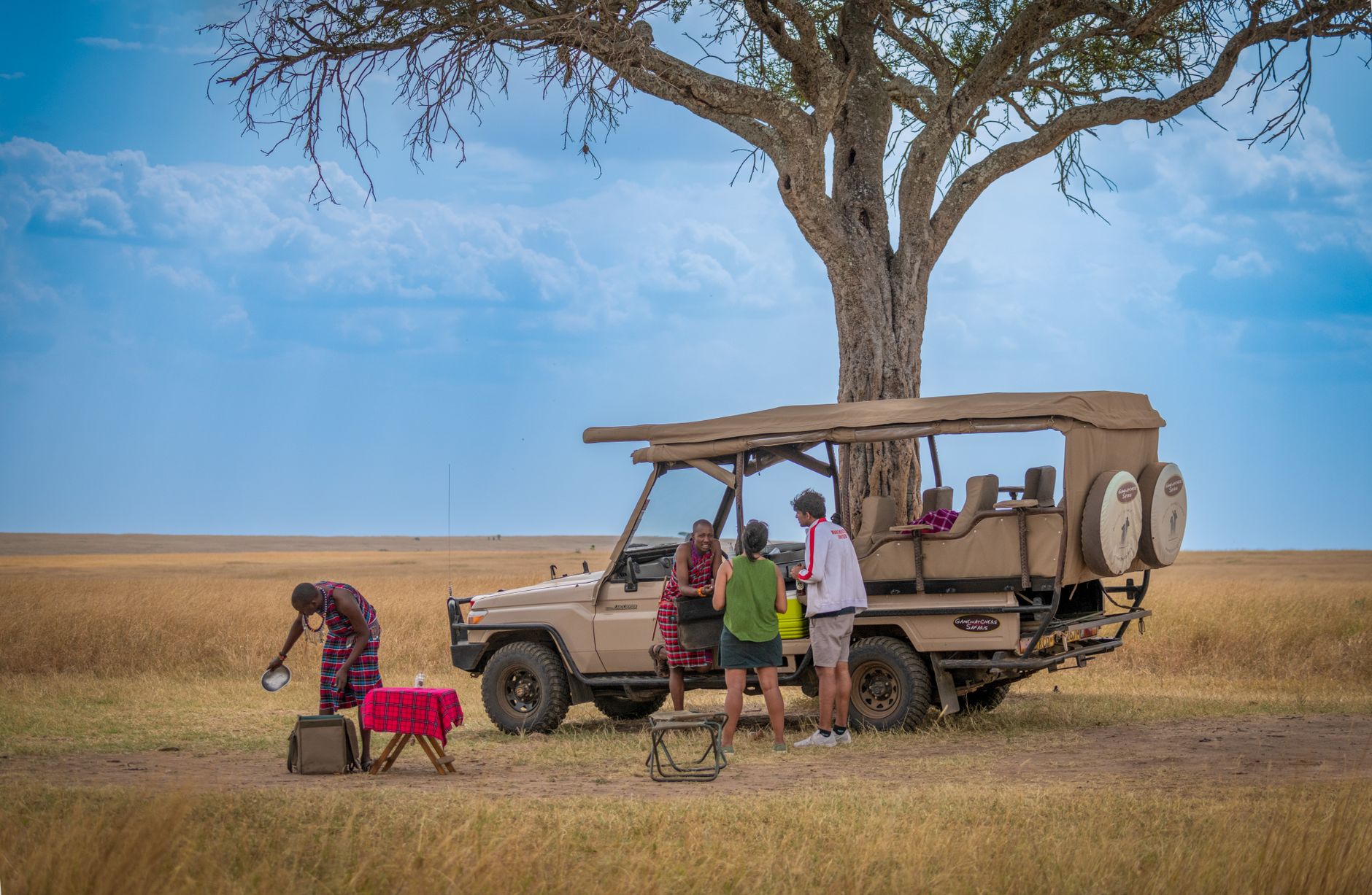
Mobile tented camps move with seasonal conditions. They use canvas, simple floors, and camp beds, but they still offer guided drives and cooked meals. Some follow the Great Migration in the Masai Mara and move to reduce empty driving time.
Permanent tented camps stay in one place. Many sit on raised timber platforms with en-suite bathrooms, hot showers, proper beds, and lodge-level service. Lodges add solid walls, larger common areas, sometimes pools and spas, and a hotel-like feel. In Kenya, many of the most wildlife-rich private conservancies use permanent tented camps rather than big lodges.
What comfort, bathrooms, electricity, and amenities can you expect?
Choose a lodge for the most predictable comfort, solid walls, larger communal facilities, pools, and easier access for travelers who prefer hotel-style accommodation. Choose a permanent tented camp when you want an en-suite bathroom and proper bed but also want closer bush sounds. Confirm electricity hours, hot-water arrangements, Wi-Fi, and bathroom access before booking.
Lodges usually have private bathrooms, flush toilets, and reliable hot water from solar or generator systems. Some offer bathtubs, minibars, and room service. Electricity may come from the grid, a generator, or a hybrid solar system. Wi-Fi is more common in lodge common areas and sometimes in rooms.
Permanent tented camps often match lodge comfort. A canvas tent can enclose a king-size bed, a writing desk, a private bathroom with a hot shower, and a small veranda. But electricity may switch off late at night in some camps. Hot water may be available only at set hours. Ask before you go if this matters to you.
Public campsites and budget camps are different. Toilets and showers are often shared. Hot showers may be available from a donkey boiler or solar bag. Electricity may come from a charging station in the mess tent or not at all. If you plan to charge camera batteries and phones, carry a power bank.
Is camping cheaper than staying in a lodge on safari?
Basic public or budget camping is generally cheaper than lodge accommodation, but permanent and luxury tented camps can be expensive. Compare the full package, including transport, meals, guide, park or conservancy fees, and activities, because the nightly accommodation price does not show the total safari cost.
The table below gives an indicative range for non-resident travelers in high season. It excludes park and conservancy entry fees, which are separate costs.
| Accommodation type | Typical comfort | Bathroom | Indicative full-board rate per person per night | Best for |
|---|---|---|---|---|
| Public or basic campsite | Mattress or own tent, basic meals | Shared, possibly bucket shower | USD 20 to 60 | Budget travelers, overlanders |
| Mobile tented camp | Proper bed, housekeeping, dining | Private en-suite in most cases | USD 180 to 500 | Migration-focused stays, seasonal locations |
| Permanent tented camp | Raised platform, full bed, lounge | Private en-suite, hot shower | USD 250 to 900 | Wildlife immersion, couples, photographers |
| Safari lodge | Solid room, hotel amenities | Private bathroom, sometimes bath | USD 200 to 800 | Families, older travelers, pools |
These figures are an indicative range, not a quote. Seasonal demand, location, and group size move the price. A simple lodge can cost less than a high-end tented camp. A small mobile camp can cost more than a large lodge if its location is exceptional. For a fuller sense of what a complete safari adds up to, see our guide to Kenya safari cost.
Conservancy fees matter. Many private conservancies in the Mara charge a daily fee per person in addition to the room rate. National parks charge their own entry fees. Compare the total package before assuming a low room rate delivers better value.
Can you hear animals at night in a safari tent, and is camping safe?
Tented camps provide a stronger sensory connection to the bush because canvas walls transmit animal calls, wind, rain, and nearby movement more clearly than lodge rooms. Guests should follow camp procedures, including escorted walks after dark and keeping tent doors closed. Lodges feel more enclosed, but neither option removes normal wildlife-related safety rules.
You may hear hyenas whooping, lions calling, elephants feeding, hippos grunting, and a constant insect chorus. In a lodge room with glass windows and thick walls, those sounds can be faint. In a tent, they can feel very close. That does not mean an animal is inside the tent. It means the canvas has less sound insulation.
Professionally managed camps are designed for safari conditions. Many have guards or askaris, fixed paths, torches, and strict rules about walking after dark. A staff member usually escorts you between your tent and the dining area. Keep your tent zipped, keep food out of your sleeping area, and follow the briefing.
Budget camping and public campsites require more personal responsibility. You may be managing your own food, cooking, and waste. In unfenced campsites, animals can pass through. Follow local guidance, keep food locked away, and never sleep with food in a tent. For a comparison of safety and access in well-run properties, look at is a Kenya safari suitable for someone with limited walking ability.
How do location, vehicle density, and safari activities change the choice?
Accommodation location can matter more than whether it is a camp or lodge. Camps in private conservancies such as Naboisho, Ol Kinyei, or Olare Motorogi may offer lower vehicle density, walking, and night drives where permitted, while properties inside or near national reserves follow different rules. Check the area’s activity regulations before choosing.
The Masai Mara reserve has some lodges and permanent camps inside the reserve. Vehicle numbers can be high at river crossings and big cat sightings. Private conservancies on the edges generally limit the number of vehicles per sighting and allow off-road driving where the rules permit. If crowd levels matter to you, compare Kenya safari parks with the lowest vehicle density before choosing.
Walking safaris and night drives are more common in conservancies and private ranches. National parks generally restrict walking to designated areas and do not allow night drives. When a camp advertises a night drive, confirm whether park entry covers night drives. The answer usually depends on where the activity happens.
Amboseli and Tsavo have different dynamics. Amboseli’s open plains and swamp areas often concentrate wildlife and vehicles. Some lodges sit inside the park or just outside it. Tsavo is larger and can involve longer distances between sightings. A lodge with a pool can be welcome after a dusty afternoon in Tsavo. A small tented camp inside a conservancy can reduce driving time to the action.
Road conditions also affect the decision. Amboseli’s black cotton soil becomes slippery in heavy rain. Tsavo’s distances are long. Some Mara conservancy tracks are rough. If you are not comfortable with long game-drive transfers, choose a property near the area you most want to explore. Our Masai Mara guide explains how the reserve and surrounding conservancies differ.
Which accommodation suits families, couples, photographers, and older travelers?
Families and travelers prioritizing easy logistics often prefer lodges, especially where pools, family rooms, solid walls, and larger dining areas matter. Couples and photographers may prefer smaller tented camps for privacy, atmosphere, and closer wildlife immersion. Older travelers should compare walking distances, steps, bathroom layouts, vehicle access, and medical-support logistics rather than relying on labels alone.
Families often do well in lodges with family rooms, interconnecting doors, and swimming pools. Some tented camps also offer family tents, but they may have age limits for walking and night drives. Ask about these rules before booking if children are in your group.
Couples often favor smaller permanent tented camps. Fewer rooms, quieter dining, and closer bush sounds can feel more intimate. Photographers often want low vehicle density, flexible schedules, and open-sided vehicles. See our list of best Kenya safari parks for photography for practical guidance.
Older travelers should think about stairs, uneven paths, bathtubs with high sides, and the distance from the tent to the dining area. A lodge with airport transfers and on-site medical support may be simpler than a remote camp. Read our guide to choosing a Kenya safari for older couples if mobility or comfort is a concern.
Can you combine camping and lodge accommodation on one Kenya safari?
Yes, combining a lodge with a tented camp often creates a balanced Kenya safari. Use a lodge in a more amenity-focused destination such as Amboseli, then choose a smaller conservancy camp in the Mara for walking, night drives, or a quieter atmosphere where regulations allow. The pair also spreads comfort, cost, and experience across the itinerary.
A common route is two or three nights at an Amboseli lodge, then three nights at a conservancy camp in the Masai Mara. Another option is a Tsavo lodge followed by a smaller Mara or Laikipia camp. This mix gives you solid walls and a pool at the start, then canvas and wildlife immersion later.
You can also mix budget and mid-range styles. Keep a basic campsite at Lake Nakuru or Naivasha, then upgrade to a permanent tented camp in the Mara. The savings on simple nights may fund better game-drive access or a private vehicle. Use our Amboseli safari guide and Tsavo safari guide to compare where a lodge or camp makes more sense.
Seasonal road conditions shape this mix. In the long rains, some camp access roads become difficult. A lodge on a main road can be a safer base. In dry months, a mobile camp in a remote conservancy can be practical. Ask your operator about road conditions before you commit.
What Are Common Questions About Kenya Safari Camping vs Lodge Accommodation?
Here are quick answers to the questions travelers most often ask when weighing Kenya safari camping vs lodge accommodation. Public campsites, mobile tented camps, permanent tented camps, and lodges vary widely in safety, facilities, cost, and night sounds, so confirm the specific property before you commit.
Is camping cheaper than staying in a lodge on safari?
Basic public or budget camping is generally cheaper than lodge accommodation, but permanent and luxury tented camps can be expensive. Compare the full package, including transport, meals, guide, park or conservancy fees, and activities, because the nightly accommodation price does not show the total safari cost.
Are tented camps in Kenya safe?
Professionally managed tented camps are designed for safari conditions and provide safety procedures, but guests must follow staff instructions. Do not walk alone after dark, leave food outside, or assume a canvas tent can be left open. Camps commonly arrange an escorted torch walk between tents and shared areas.
Do safari camps have toilets and showers?
Many permanent and luxury tented camps have private en-suite toilets, hot showers, and proper beds. Basic campsites may instead provide shared facilities, bucket showers, or limited water. Ask whether the bathroom is private, whether hot water is available continuously, and whether electricity is supplied before booking.
Can you hear animals at night in a safari tent?
Yes. Canvas walls make animal calls and bush sounds more noticeable than they usually are inside a solid lodge building. You may hear hyenas, lions, elephants, hippos, insects, or birds, but sound does not mean an animal is inside the tent. Keep the door closed and follow the camp’s escort rules.
Is a Kenya safari better in a lodge or tented camp?
Neither is universally better. Choose a lodge for solid walls, predictable amenities, family convenience, and easier accessibility. Choose a tented camp for a smaller-scale atmosphere and stronger connection to the bush. The right choice depends on the specific property’s location, season, activity rules, facilities, and total price.
Where can you compare Kenya safari operators for camping or lodge stays?
You can compare Kenya safari operators for both camping and lodge itineraries on FindMySafari, Valley Safaris, and Trunktrails Safaris. These platforms let you browse packages that mix public campsites, permanent tented camps, and lodges so the overnight style matches your budget and comfort level. Browse packages and compare safari operators before you commit.
Where can you find more safari planning resources?
These additional guides from TouringInsights and partner sites cover safari packages, wildlife tours, and area maps that can help with planning before you book. Use them alongside this guide to compare accommodation styles, locations, and costs across parks and conservancies in Kenya.
- Kenya safari packages from SafariPure
- Kenya wildlife tours from Trunktrails Safaris
- Map of Amboseli from Valley Safaris
- Compare Kenya safari packages on FindMySafari